TO SEE ROBERT BURLEY’S CURRENT WORK GO TO: robertburley.com

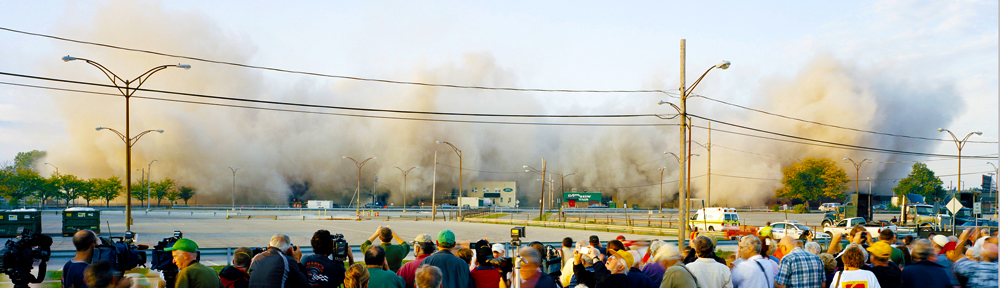
TO SEE ROBERT BURLEY’S CURRENT WORK GO TO: robertburley.com
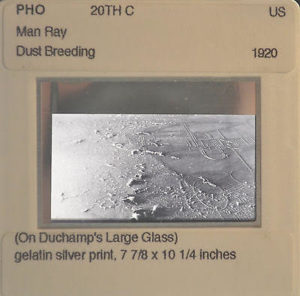
Looking forward to the opening of David Campany’s exhibition A Handful of Dust in New York next week, “…[a] speculative history of the last century, and a visual journey through some of its unlikeliest imagery.” Work from the Disappearance of Darkness will be included among that of Man Ray, Sophie Ristelhueber, Xavier Ribas, Edward Ruscha, Jeff Wall, and many other notable artists.
Pratt Institute, New York
September 14 – December 2, 2016
For more information follow: http://davidcampany.com/a-handful-of-dust/
Scotiabank CONTACT Photography Festival Primary Exhibition
The Art Museum – University of Toronto, May 6th/15 to July 30/16
Curated by Jessica Bradley
Presented in both galleries that comprise the new Art Museum, Counterpoints gathers more than 100 images from over 20 private collections, revealing a remarkable breadth and depth of interest in photography in this city. The exhibition has evolved through the generosity of passionately committed collectors who granted the removal of works from their personal domestic and artistic spheres, allowing them to be seen by the public—many for the first time in Toronto. Images are assembled by visual affiliation and recurring subjects, which are conceived differently by photographers in time, cultural and social contexts, and through changing technologies. Counterpoints proposes a view of photography—and some of its signal historical and contemporary transitions—that is, like the daily experience of images, ultimately heterogeneous and non-linear.
So wonderful to have been included in this exhibition curated by David Campany at Le Bal in Paris. Below is a link to the exhibition and a book (published by Mack) which includes a fantastic essay by Campany.
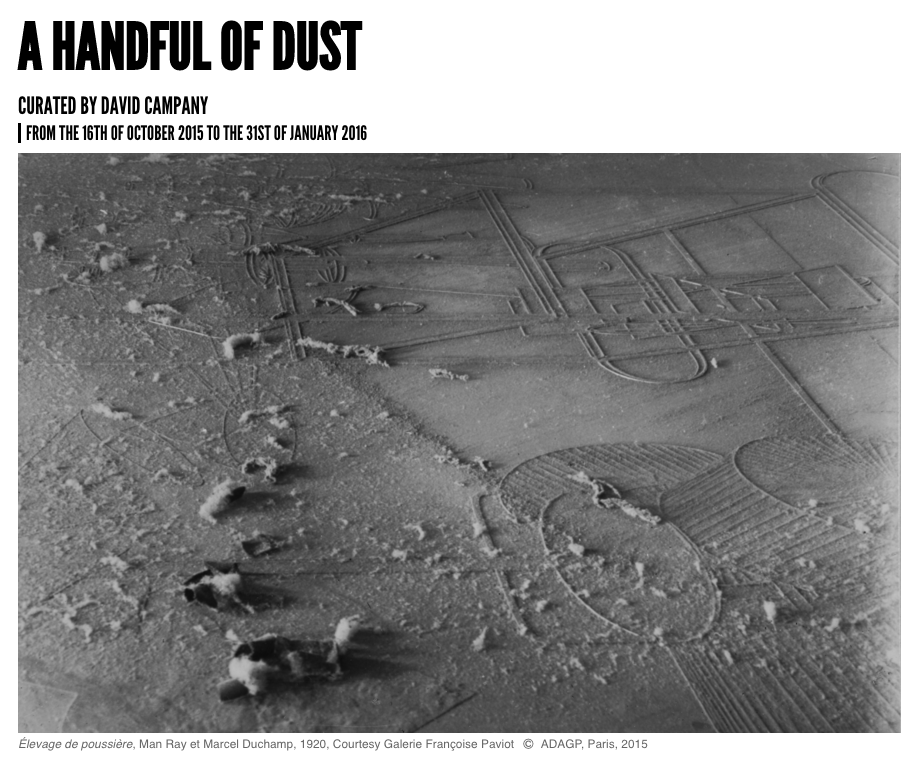 Dust – unwanted, inevitable, destructive – is the great suppressed substance of the modern age. The world of order and hygiene attempts to banish dust yet it will always return.
The exhibition takes as its starting point two significant events that happened in Europe in October 1922. In the Parisian journal Littérature, Man Ray published his photograph of dust gathering on the surface of Marcel Duchamp’s Large Glass (where it was title ‘Vue Prise en Aeroplane’); and in the London journal The Cirterion TS Eliot published his modernist masterwork The Waste Land containing the immortal lines:
‘AND I WILL SHOW YOU SOMETHING DIFFERENT FROM EITHER
YOUR SHADOW AT MORNING STRIDING BEHIND YOU
OR YOUR SHADOW AT EVENING RISING TO MEET YOU; I WILL SHOW YOU FEAR IN A HANDFUL OF DUST.’ T.S. ELIOT
From this beginning the exhibition takes in aerial photography, forensic photography, abstractions of landscapes, ruins, postcards and press photos of the American dust storms, artists’ videos, film clips, documentary photography and site specific works, featuring artists like Man Ray, John Divola, Sophie Ristelhueber, Walker Evans, Mona Kuhn, Aaron Siskind, Gerhard Richter, Xavier Ribas, Nick Waplington, Eva Stenram, Georges Bataille, Jeff Wall, among others.
David Campany
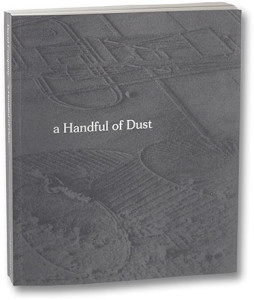
“…the book somehow wends its way to aerial reconnaissance photography, abstract landscapes, forensics, American dust storms, artists’ videos and the Iraq War. The cumulative effect is brilliant, almost novelistic, and the book comes with a removable insert featuring an equally brilliant essay by Campany.”
Teju Cole, The New York Times
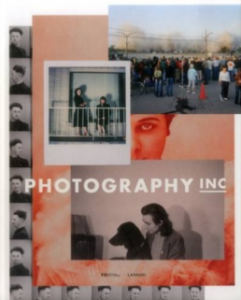
Curator Tamara Bergmans has assembled this exhibition to celebrate FoMu’s 50th Anniversary as one the world’s great photographic museums. She has also produced a richly illustrated catalogue with contributions from Anne Deckers, Paul Messier and A.D. Coleman.
FoMu is an amazing museum and this exhibition/catalogue draws from a wealth of material in its collections.
Since my book was released three years ago most of the discussion around this project has been related to the downfall of the photographic industry and the future life of photographic materials. Is film better than digital? Will Kodak and the other photographic companies continue to produce film in the future? While I’ve enjoyed the dialogue and ensuing debate about these topics I never really intended for this work to be focused strictly on technology. And while I decided to include historical texts in the book – it was never my intention that it would serve as a comprehensive history of the industry. For me, creating this work was more about understanding the changing nature of my medium – both as an art form and as a tool with myriad applications in contemporary society.
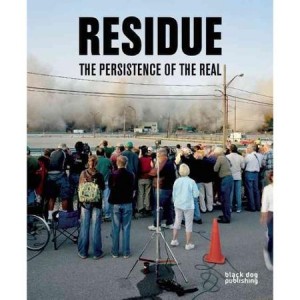
A year after the publication of the book I created an exhibition (Gaelle Morel, Curator) adding new analogue and digital works to accompany my large format photographs.The goal of the exhibition was to bring the work into a larger conversation about photography’s digital present. This exhibition has now been shown at five venues in Canada, the US and Europe and currently is part a wonderful new group exhibition at the Vancouver Art Gallery titled, Residue: The Persistence of the Real. In addition to my own, the exhibit includes work by artists Stan Douglas, Babak Golkar, Geoffrey James, Brian Jungen & Duane Linklater, Catherine Opie and Amie Siegel.
Through this show, curator Grant Arnold, explores photography’s new relationship to realism in the 21st century and how the medium has been reshaped not only by new technologies but our new responses to photo-based media. Arnold has done an amazing job with the exhibition and worked with Black Dog Publishers on a catalogue which will be released in early September.
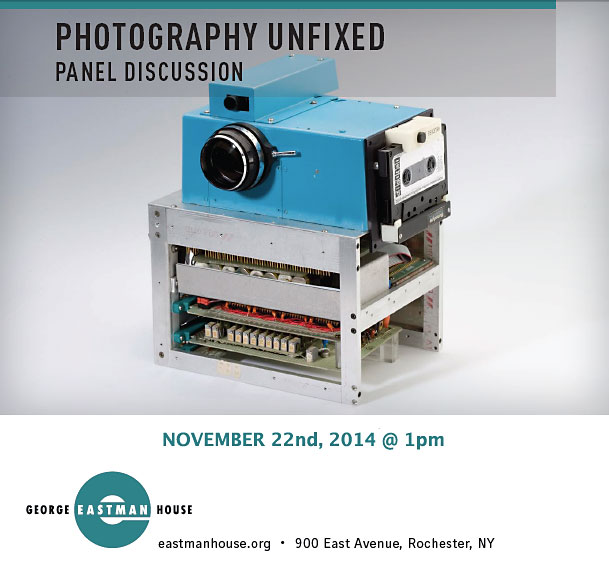
I love the title of this panel which I’m participating in at Eastman House:
Saturday, November 22nd/14 starting at 1pm.
What will a curator, photo-editor, photographer and the engineer who invented the first digital camera have to say about the state of photography today?
Should be interesting but I’m just as curious to know what comments will come from the audience in Photography City – Rochester, NY.
Over the last six months two new photography books have been released that touch on the theme of Rochester’s long standing reputation as Photography City. Magnum photographer Alex Webb teamed up with his partner and fellow photographer Rebecca Norris-Webb to produce a poetic work titled, Memory City (Radius Books 2014). This beautifully produced volume presents a visual essay created over a two year period that began with one of the Magnum’s famous road trips to Rochester. In 2012 a group of Magnum photographer’s descended on the Rochester lead by Martin Parr – each having committed to creating a portfolio of 100 images about the city over a two week period. It appears that two weeks was just not enough to document the place that was home to Kodak and responsible producing film: that most essential material for the team of Webb & Norris. They returned on many occasions and produced this book as an homage to both the Eastman Kodak Company as well as photography’s material history.
Just released in September is another book titled, Kodak City (Kehrer Verlag), by Swiss photographer Catherine Leutenegger who first started photographing in Rochester in 2007 and made several trips back to city of the Great Yellow Father over the next four years. Like the Webb-Norris book Leutenegger looks at a metropolis that has suffered the great loss of Kodak as the company that not only employed tens of thousands of workers, but also shaped built the city’s reputation as one of the great centres of innovation in the field of imaging science as well as a centre for art and education. Leutenegger uses photography’s descriptive abilities to evoke a sense of melancholy in what appearsto be deadpan images of a city in transition.
Throughout the twentieth century all photographic roads led to Rochester regardless of your relationship to the medium. Today whether you are a photographer, technologist or enthusiast the City of Rochester is a remarkable place that continues to attract artists, historians and researchers engaged with the medium. As we all re-negotiate our relationship to photographic images in the 21st century one can’t help but feel there are still many books to be done about this city and its history. I look forward to more.
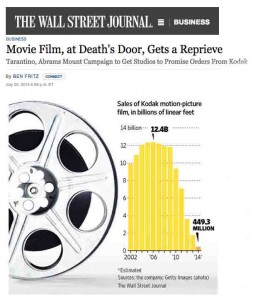 Two years ago Kodak announced it would be producing motion picture film until 2015 under an agreement with four Hollywood studios. The movie industry is the last major market to make the shift from film to digital and many industry insiders have been saying that once Hollywood no longer needs film – it won’t be possible for Kodak or any other company to continue production; it’s just too complicated and expensive to manufacture as a niche product. Without the economy of scale provided by major studios – the manufacturers would be forced to wind down and discontinue the last remaining products available. Fuji threw in the towel in 2013 leaving the Kodak plant in Rochester as the only facility continuing to manufacture movie film. I’ve been watching this story because my still photographic films – specifically my color negative sheet films – can only be produced on the coat tails of those orders for millions of feet of motion picture film. I’ve been counting the days until I would have one less option for making photographs. However,a recent article in the Wall Street Journal states that a coalition of major movie studios have committed to continued, though limited production runs of film in the coming years.
I say, BRAVO!! and hope that this agreement continues long into the future. It is interesting to note that the push behind this deal is from individual artist/directors like Scorcese, Tarintino and Nolan who all use digital systems but do not want to lose the option of film for future productions. Once again the point is made that film and digital are different mediums.
Fotomuseum Winterthur has a wonderful blog, STILL SEARCHING which explores the changing nature of photography though posts by historians, artists and theorists. Artist Trevor Paglen looks at the the state of photography as the medium continues to shift in too many ways to count.
What was interesting to me about Paglen’s article was that he avoids a technological discussion of how photographs are being made (i.e. analog vs. digital) and instead asks whether “photography and seeing” are becoming synonymous?”
Ultimately, it’s this change in our relationship to photographs that is most interesting to explore. As a practitioner I discovered that while documenting the demise of the photographic industry over the last decade I not only experienced radical shifts in the ways I made photographs but more importantly how I viewed them after the fact. My biggest dilemma became not what technology to use but rather about how to make meaningful photographs in a world that was suddenly saturated with photographic imagery. As Paglen suggests “traditional approaches to doing-photography and thinking-about-photography feel increasingly anachronistic”
I agree but also wonder how the anachronistic elements of the medium will be redefined in the 21st century. I can’t help but think we are all re-living the experience of the 19th century French painter, Paul Delaroche, who upon seeing the first photograph in 1839 ran into the street and declared, “From today painting is dead”. Painting didn’t die but its relationship to reality was fundamentally altered forever which, in turn, allowed painters the opportunity to explore new dimensions of their medium. Will this history repeat itself with photography as it transitions into “old media”. Perhaps it is time for a new – New Vision.