ART PHOTO STUDIO: CLOSED DUE TO RETIREMENT, TORONTO, ONTARIO 2005
Throughout the twentieth century, professional photographers were those with the specialized knowledge and equipment required to create artful photographic images that were above and beyond the ability of any amateur. Theirs was a respected trade that combined knowledge of both technology and art, and their services were in constant demand. Ironically, while most professional photographers spent years learning their craft, they knew little about how their materials were made, and were dependent on a photographic industry over which they had no control. Just as the skill involved in making photographs retained an aura of mystery and magic, the production of films and papers remained a closely guarded secret held by a few profit-driven corporations.
With the decline of traditional photographic methods, the commercial photographic studio, a mainstay in every town around the world, began to fade into history. The Art Photo Studio, established in 1951, stayed in business for over fifty years; it was converted into an upscale pâtisserie in 2008.
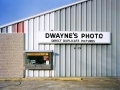
DWAYNE’S PHOTO LAB, PARSONS, KANSAS DECEMBER 30, 2010
Much of photography’s early history took place in villages and small urban centers off the beaten track, so it was not surprising that the end of the medium’s longest running product, Kodachrome film, would play itself out in Parsons, Kansas, a small town in the American Midwest—a three-hour drive from the closest international airport. A family-run business, Dwayne’s was the last photography lab in the world to process the iconic transparency film that had defined the standard for color photography. Invented by two classical musicians, Leopold Godowsky Jr. and Leopold Mannes, Kodachrome was first introduced by Kodak in 1935 as a movie film, but soon became indispensable for still photographers who sought to record their world in color. Over the course of its seventy-five-year life, Kodachrome became a part of popular culture: figuring in the music of Paul Simon, in the name of a national park in Utah, and in the countless color photographs that appeared on the covers of every major magazine, shot by some of the world’s most renowned photographers.
Unlike other color films, Kodachrome required specialized equipment and processing chemistry, that was discontinued by Kodak in 2009. One year later, on an unseasonably warm day at the end of December, Dwayne’s accepted Kodachrome for processing for the last time, with a cut-off time of noon. Film arrived from around the world by mail, courier, and in person, while overwhelmed lab employees struggled to keep up with the high volume. Concerned that they might not have enough chemistry to process the thousands of rolls that came in that day, the lab manager called the Kodak Company to assist with calculations in relation to their remaining stock. He quickly discovered that the lab was short of one crucial chemical component: the magenta dye. Kodak was able to find the last available container of this dye — one that had been used in the research labs — and shipped it to Parsons. The last rolls of film received that day were run through the Kodachrome processor at 1:30 p.m. on Tuesday, January 19, 2011.
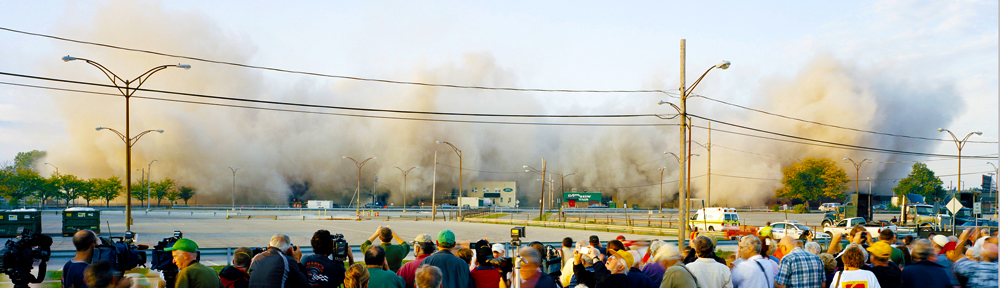
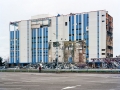
AFTER THE FAILED IMPLOSION OF THE KODAK-PATHÉ BUILDING GL, CHALON-SUR-SAÔNE, FRANCE DECEMBER 10, 2007
Chalon-sur-Saône, located south of Dijon in Burgundy, France, played an important role in the history of photography: it was here in 1827, that inventor Joseph Nicéphore Niépce created the first surviving photograph. Tourists can still visit the third-floor laboratory in the nearby village of Saint-Loup-de-Varennes, where Niépce successfully fixed the image of his camera obscura onto a pewter plate, using chemicals mixed with bitumen of Judea.
It was only fitting that Kodak would establish a manufacturing facility in Chalon, the city that claimed to have invented photography. They did so in 1961, by which time Niépce’s invention had grown into a global phenomenon. The plant seen on the facing page, operated by Kodak-Pathé, produced a variety of film products for nearly fifty years. When Kodak announced the facility would be closed in 2006, it was a shock not just to the city’s economy, but its citizens as well. On a gray December morning in 2007, crowds gathered to watch the death of photography in its birthplace. Photography refused to go quietly. After the demolition team had set off the 950 kilograms of explosives placed at the base of the building, only a portion of the structure came down. An embarrassed group of Kodak executives were forced to schedule a second attempt in February of 2008, which successfully ended the company’s presence in Niépce’s city.
FILM COATING FACILITY, AGFA-GEVAERT, MORTSEL, BELGIUM [#1] 2007
In 1894, Belgian photographer - entrepreneur Lieven Gevaert established his photographic paper company, Gevaert & Cie, in Antwerp. Ten years later, he moved his flourishing business to Mortsel, a quiet suburb just south of the city. Like the Kodak factory established by George Eastman in Rochester, Gevaert’s modest manufacturing operations grew exponentially at the beginning of the twentieth century in response to the rapidly increasing demand for his films and papers, from both amateurs and professionals. Also like Eastman, Gevaert was ambitious, innovative, and a visionary. After merging with the German company Agfa in 1964, his sprawling complex expanded again to become the largest photographic company in Europe, and a strong competitor of Kodak.
While Gevaert’s history is still reflected in the smaller brick structures that date from the company’s early years, these low-rise buildings are now dwarfed by enormous white, windowless coating facilities dedicated to the mass production of photographic film in darkened spaces. During the latter half of the twentieth century, society found more uses for photographic film than either Gevaert or Eastman could have ever imagined. The demand did not last. By the time this photograph was made, the consumer division of the company, AgfaPhoto, located in nearby Leverkusen, Germany, had declared bankruptcy; in 2004, it shut down its factory and laid off all its employees. Agfa - Gevaert lives on in Mortsel, but is now limited to making specialized medical and aerial films, in buildings on the verge of outliving their own usefulness.
VIEW OF KODAK HEAD OFFICES FROM THE SMITH STREET BRIDGE, ROCHESTER, NEW YORK 2008
At its peak in the 1980s, Kodak employed more than 60,000 people in Rochester, New York —more than a quarter of the city’s population at the time. When George Eastman founded the Eastman Kodak Company in 1892, it quickly became an American business legend, ultimately making Rochester’s economy the second largest in the state after that of New York City.
Eastman not only provided jobs in Kodak Park, but he also had a hand in every aspect of Rochester’s civic life. He founded its illustrious music and dental schools, endowed its university, and created the Community Chest (later known as the United Way). Over the course of the twentieth century the city became known as “Smugtown,” in part because its economy seemed invincible. Depressions and economic downturns had no significant effect: people always needed film. To be employed by Kodak meant having a lifetime job with a good salary and benefits. George Eastman was one of the first businessmen in America to grant employees dividends and profit sharing. “Bonus Days” were well-known to retailers in Rochester, who extended store hours so Kodak employees could spend their annual windfalls.
The first rumblings of trouble for Kodak came in the early 1990s, when the company began to face stiff competition from overseas, and embarked upon disastrous forays into new products and businesses. By 2000, the digital revolution and the subsequent huge drop in demand for traditional films and papers had pushed the company into economic free-fall. By 2011, Kodak employed fewer than 7,000 people in Rochester, and was struggling to transform itself into a digital company.
There are two Kodak building complexes in Rochester: the company’s head offices in Kodak Tower located in the downtown core on State Street; and the manufacturing, research, and warehousing operations in Kodak Park located in the northwestern part of the city. Upon its completion in 1916, Kodak Tower was Rochester’s tallest building. When, in 1929, he saw the plans for the new Times Square Building, also to be located in downtown Rochester, George Eastman added three floors and a spire to Kodak Tower so that the company’s headquarters could maintain its status as the city’s tallest structure.
Pingback: Photo-Blacksmiths? | Photography Blog | South | Africa